

Protect trees during construction with careful planning and effective strategies. Construction sites present numerous challenges to trees, from the risk of root damage to trunk injuries. Here’s a quick guide to safeguard trees:
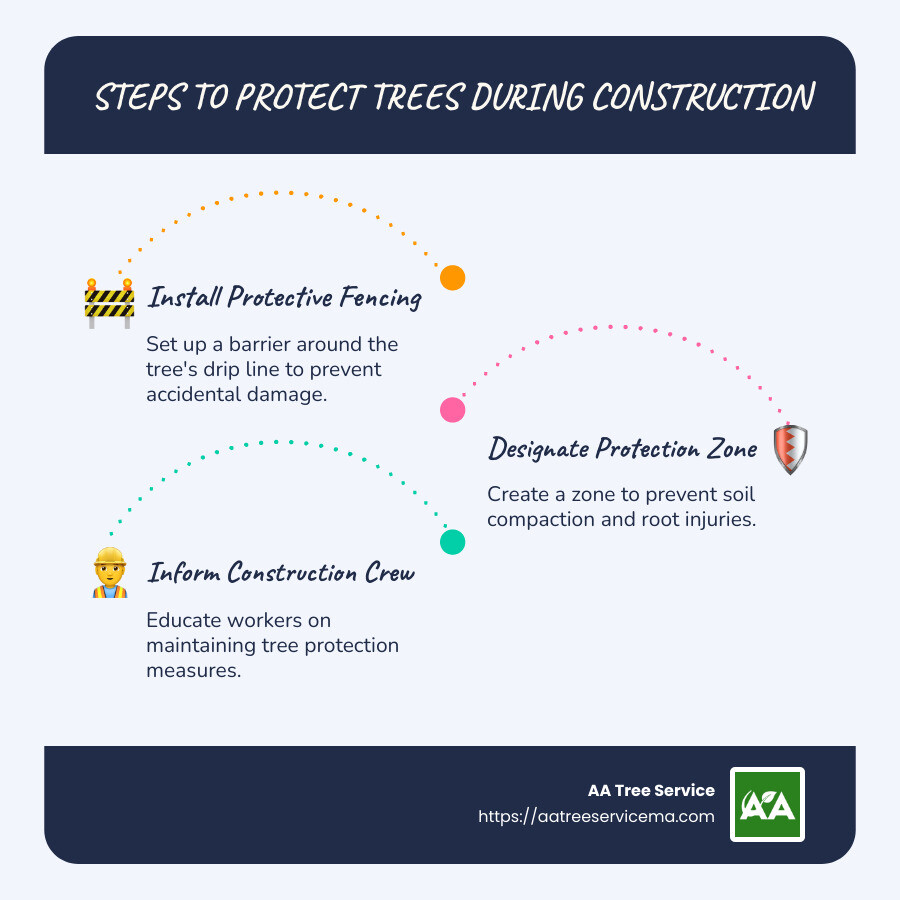
- Install tree protection fencing around the tree drip line.
- Designate a tree protection zone to prevent soil compaction and root damage.
- Inform construction crews about the importance of maintaining these protective measures.
Trees are vital to our environment and property aesthetics, providing beauty, shade, and enhancing air quality in our communities. Yet, construction activities can pose significant threats to their health and safety. Heavy machinery, the storage of materials, and even the simple act of walking too close to a tree can have serious consequences.
To maintain the health and beauty of your landscape, planning is key. By identifying and protecting valuable trees before construction begins, you can avoid costly damage and ensure your trees continue to thrive after the project is completed.
Simple Protect trees during construction glossary:
– Land clearing for development
– Affordable stump grinding
– Emergency tree cutting services
Understanding Construction Damage to Trees
Construction can be tough on trees. The heavy machinery, constant movement, and changes in the landscape can harm them in many ways. Let’s break down the main types of damage trees can face during construction.
Soil Compaction
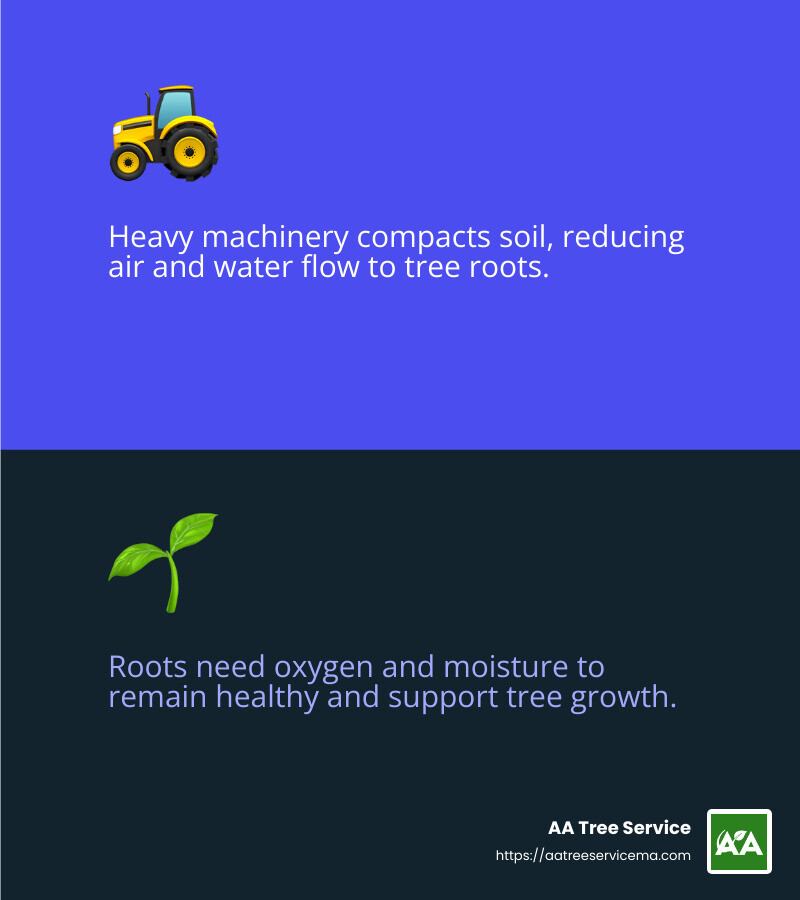
Soil compaction is a big issue. When heavy equipment rolls over the ground, it presses the soil tightly together. This makes it hard for air and water to reach the tree roots, which need these to stay healthy.
Root Severing
Roots are like the tree’s lifeline. Cutting them can be devastating. Construction activities like trenching and digging can sever roots, which weakens the tree and makes it unstable. This is especially dangerous for older trees, which might not recover as easily.
Trunk Injury
Imagine bumping into a tree with a bulldozer. Ouch, right? That’s trunk injury. It happens when machinery or materials hit the tree. This can strip the bark or even damage the wood underneath. Trees need their bark to protect against disease and pests.
Limb Breakage
Branches can break during construction if machinery hits them or if they’re not tied back properly. This not only looks bad but also stresses the tree. Broken branches can be an entry point for insects and diseases.
Protect trees during construction by understanding these risks. The key is to plan ahead and use protective measures like fencing and barriers. This way, you can keep your trees safe and healthy, even in the middle of a busy construction site.
Next, we’ll dive into how to protect these green giants with preemptive measures.
Protect Trees During Construction
Construction sites can be a danger zone for trees. But with the right strategies, you can protect trees during construction and keep them healthy. Let’s explore some effective ways to safeguard these green giants.
Tree Protection Fencing
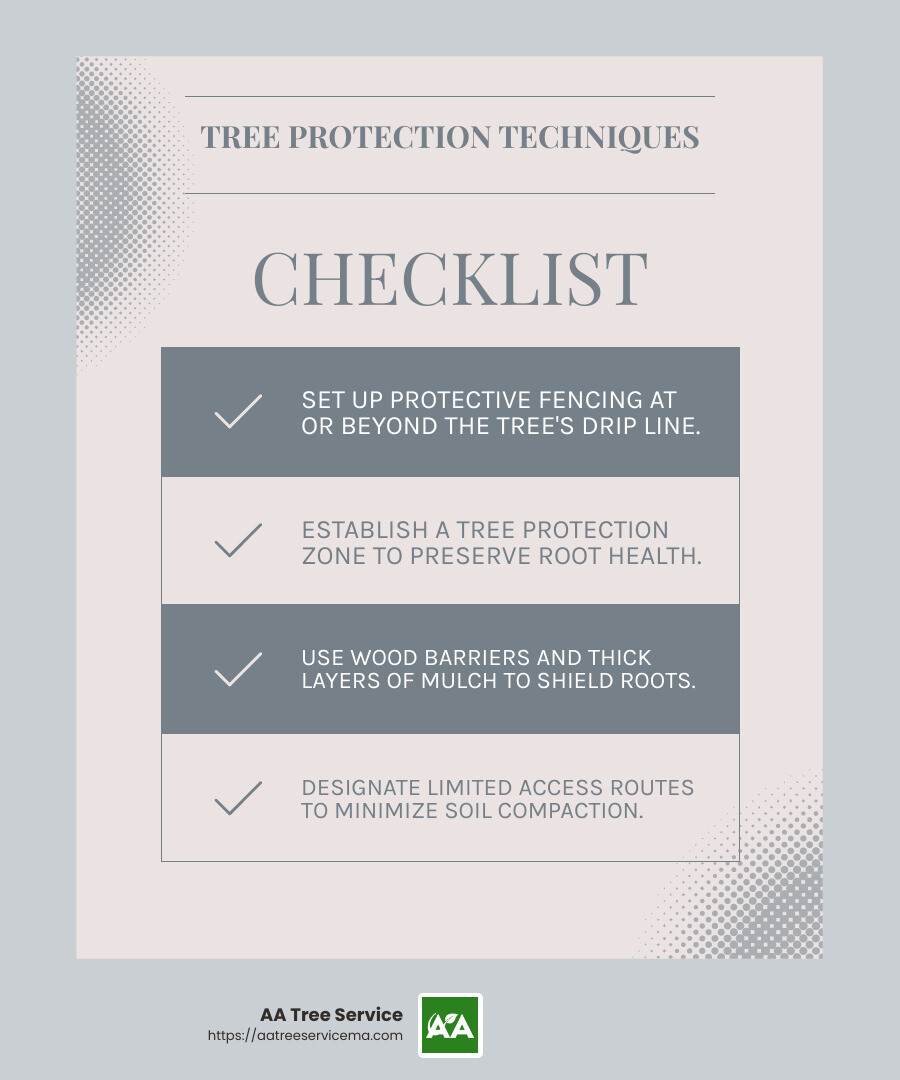
One of the best ways to protect trees is by setting up tree protection fencing. This fencing should be placed at or beyond the tree’s drip line—the outermost edge of the tree’s canopy. This area is crucial because it covers the root zone, which needs to remain undisturbed.
Why is this important?
- Alerts Workers: Fencing sends a clear message to workers that they must stay out of the protected area.
- Prevents Damage: It stops heavy machinery from driving over roots and prevents storage of materials near trees.
Tree Protection Zone
The tree protection zone is sacred ground for tree health. This zone includes the space around the tree that must remain untouched during construction. The size of this zone depends on the tree’s age and size. For mature trees, the zone should extend one foot from the trunk for each inch of trunk diameter.
Key Benefits:
- Root Health: Protects roots from being compacted or severed.
- Tree Stability: Ensures the tree remains stable and less prone to falling.
Sensitive Construction Techniques
Using sensitive construction techniques can make a big difference. Here are some methods to consider:
- Limited Access Routes: Designate specific routes for machinery to minimize soil compaction.
- Manual Work Near Trees: For areas close to valuable trees, consider using manual tools instead of heavy machinery.
- Protective Barriers: Use wood barriers, signs, and thick layers of mulch to shield roots from damage.
Why use these techniques?
- Minimize Impact: Reduces the physical impact on the tree and soil.
- Preserve Health: Helps maintain the tree’s health and longevity.
By implementing these strategies, you can significantly reduce the risk of damage to trees during construction. Next, we’ll explore preemptive measures to ensure tree safety.
Preemptive Measures for Tree Safety
Before construction begins, taking preemptive measures can greatly improve the safety of your trees. Let’s explore some essential steps to ensure your green friends are well-protected.
Identify Important Trees
Start by identifying which trees are most important to you. This could be due to their size, age, species, or personal significance. Document their locations and conditions with photographs. This will be useful for a before-and-after comparison.
Why is this crucial?
- Prioritize Protection: Knowing which trees are valuable helps you prioritize their protection.
- Plan for Replacement: If any tree gets damaged, having records helps in assessing its value for replacement.
Plan Construction Routes
Careful planning of construction routes can prevent unnecessary damage to trees. Work with your contractor to establish entrance and exit routes for heavy vehicles. Ideally, limit these routes to a single path to minimize soil compaction.
Key Considerations:
- Route Efficiency: Choose routes that avoid tree root zones.
- Minimal Impact: Reduce the number of routes to lessen the impact on the soil and roots.
Install Protective Structures
Protective structures are essential to shield trees from construction activities. An ISA Certified Arborist can recommend the best types of protection for your situation. Common protective structures include:
- Protective Fencing: This is the first line of defense, clearly marking the tree protection zone.
- Wood Barriers: These can be placed around trunks to prevent physical damage.
- Mulch Layers: Thick layers of mulch over soil can cushion roots from the weight of heavy machinery.
Benefits of Protective Structures:
- Visibility: They make tree protection zones highly visible to all workers.
- Durability: Sturdy materials ensure long-lasting protection throughout the construction phase.
By identifying important trees, planning construction routes, and installing protective structures, you can take significant steps to ensure tree safety. These efforts will help maintain the beauty and health of your landscape.
Next, we’ll discuss best practices for maintaining tree protection during the construction process.
Best Practices for Tree Protection
When construction is underway, keeping your trees safe is crucial. Let’s explore some best practices to ensure your trees stay healthy and strong.
Avoid Soil Compaction
Soil compaction is a tree’s worst enemy during construction. It squeezes out air and water, making it hard for roots to breathe and absorb nutrients.
How to avoid it:
- Limit Heavy Equipment: Use the smallest equipment possible. For some tasks, consider doing them by hand.
- Designate Safe Zones: Keep heavy machinery and material storage away from the tree’s dripline—the area directly under the tree’s canopy.
- Use Protective Mats: If you must work near trees, lay down interlocking mats or ¾” plywood to spread out the weight and reduce compaction.
Protect Tree Roots
Tree roots are like the tree’s lifeline. Damaging them can lead to poor health or even death.
Steps to protect roots:
- Establish a Tree Protection Zone: This area should be at least 1½ times the diameter of the tree’s canopy dripline. Install a visible fence around this zone to prevent unauthorized access.
- Careful Excavation: If digging is unavoidable, use soil-boring equipment to tunnel beneath roots instead of cutting through them.
- Mulch Generously: Apply 2 to 4 inches of organic mulch around the tree to help retain moisture and protect roots from temperature extremes.
Protect Trunk and Limbs
The trunk and limbs are vital for a tree’s stability and health. Damage to these parts can expose the tree to diseases.
Ways to protect them:
- Install Trunk Barriers: Wrap trunks with protective materials like wood or burlap to shield them from accidental knocks.
- Prune Wisely: Remove dead or weak branches before construction begins to prevent breakage. Always hire a certified arborist for pruning.
- Avoid Topping: Never cut off the top of a tree. It leads to weak regrowth and makes the tree more vulnerable to disease and breakage.
By following these best practices, you can significantly reduce the risk of damage to your trees during construction. Next, we’ll tackle some frequently asked questions about tree protection.
Frequently Asked Questions about Tree Protection
How much area around a tree should be protected during construction?
To protect trees during construction, it’s crucial to establish a Tree Protection Zone. This zone should extend at least 1½ times the diameter of the tree’s canopy dripline. For example, if the tree’s canopy is 60 feet across, the protection zone should extend 90 feet in diameter around the tree. This ensures that the roots have enough space to access air, water, and nutrients without interference.
How to protect plants during construction?
Fencing and high-visible barriers are your best allies in safeguarding plants. Before construction starts, mark the protection zones clearly with fencing or bright flags. This alerts all workers to steer clear of these areas, preventing accidental damage. Additionally, using barriers like wood or steel can protect the trunk and root zones from physical harm.
How close to a tree can you excavate?
Safe excavation distance is key to protecting tree roots. Ideally, avoid digging within the tree’s canopy dripline. If you must excavate near a tree, use sensitive techniques like soil-boring equipment to tunnel beneath roots instead of cutting through them. This minimizes root damage and helps maintain the tree’s health and stability.
Conclusion
At AA Tree Service, we understand that trees are not just part of the landscape—they’re valuable assets that deserve protection, especially during construction. Tree health monitoring is essential to ensuring that your trees remain healthy and vibrant throughout the building process. By keeping a close eye on the trees’ condition, we can identify potential issues early and take corrective action to maintain their health.
Professional consultation is crucial when it comes to protecting trees during construction. Consulting with experts like us ensures that your trees receive the care and attention they need. Our experienced team can provide guidance on establishing effective tree protection zones, using appropriate construction techniques, and implementing preventive measures to avoid soil compaction and root damage.
Choosing a professional service like AA Tree Service means you have a partner committed to preserving the beauty and health of your trees. With over 20 years of experience, we offer reliable and efficient solutions custom to your specific needs, whether you’re in Massachusetts or New Hampshire.
For more information about our services and to see how we can help keep your trees safe during construction, visit our Service Area page. Let us be your trusted partner in maintaining a safe, beautiful outdoor environment.
